|
IL MTSS Network Fall Newsletter |
|
Our quarterly newsletter is dedicated to sharing the resources and information you need to achieve learning growth for your students.
In this issue: Special Education!
How does special education fit into MTSS? What can special education experts bring to the table when it comes to improving your systems?
Keep reading to learn more in our interviews with Special Education Director Tracey Fair and IL MTSS-N Coach Cindy Knight Meisner. You’ll also find resources and conversation starters to use in your district. |
|
|
|
 |
MTSS and Special Education:
The Importance of Collaboration
|
|
Special educators have a wealth of knowledge about meeting the needs of individual students. General educators are content experts with deep knowledge of the skills and information students need to advance to the next level.
That’s why we believe in the power of collaboration among general education and special education teachers to improve outcomes for all students.
How effectively is your school or district promoting such collaboration? These guiding questions will help you assess your current strengths and areas for improvement.
- Are both special educators and general educators represented on leadership and implementation teams?
- Are special educators actively and regularly included in professional learning sessions for all staff as well as those designed for their specialized roles?
- Are both special and general educators actively and regularly involved in collaboration with grade level or content area teams?
- Do school processes and planning provide time for general and special educators to be together on a regular basis?
- What is currently in place, or can be put in place, to plan for improvements in these areas?
|
|
|
|
|
|
|
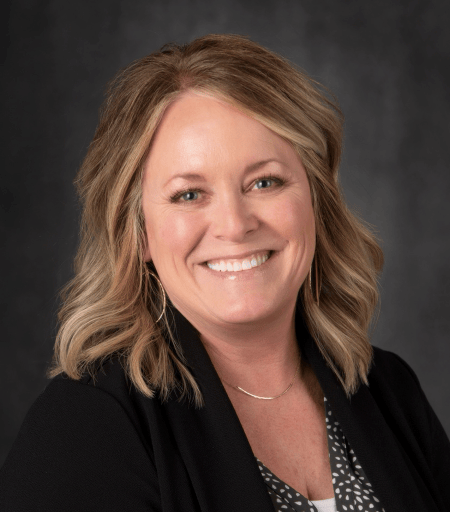
Tracey Fair
Director of Four Rivers Special Education District
Jacksonville, Illinois
We spoke with Tracey to learn more about why MTSS is so important for effective special education, and how you can build more successful MTSS supports through collaboration with special education staff. |
|
|
Here’s an excerpt of our interview.
Can you start out by telling us a little bit about yourself and your role?
I’ve been in special ed for 30 years. I was a school psychologist in Springfield 186 for about 23 years. Then I went into administration, and I am now I’m in my sixth year as Director of Special Education at Four Rivers Special Education District. We have 19 member districts.
How did you end up working with the Illinois MTSS Network?
For the past five years we’ve been working on establishing benchmarking and layered supports. As part of that process, I contacted IL MTSS-N Coach Cindy Knight Meisner to ask what she and the network could do to help us and our districts implement MTSS. Cindy designed a training based on the needs of our districts.
Why is it beneficial for districts to have tiered supports?
From a special education perspective, over the last five years, the needs of the students have become greater and greater. More students than ever are being referred for special education.
One of the criteria to diagnose a learning disability is to show that interventions were attempted and there was a lack of response to intervention. So getting those tier 1 and 2 interventions in place with solid documentation is essential to special education diagnosis, as well as serving all students effectively.
One of the takeaways I’m getting from you is that when districts are creating their MTSS, they should try to include special education experts in the MTSS team.
I think it would be ideal, yes! Once a special education expert has been working in the district for several years, they have a very good picture of the patterns of assessments across the district. They can help to identify areas where many students are struggling district-wide – say phonics or SEL, for example – where the district would really benefit from stronger core curriculum at tier 1.
|
| Read the Full Interview |
|
|
|
|
Where is Special Education in an MTSS?
|
|
|
|
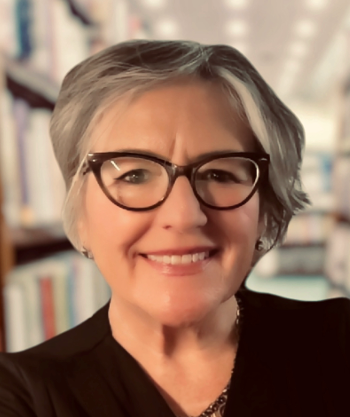
An interview with
Cindy Knight Meisner
IL MTSS-N Network Capacity Coach
We interviewed Cindy in May when she was planning a conference presentation about special education and MTSS. Her insight and advice are still relevant to anyone interested in these topics!
|
|
|
Here’s an excerpt of our interview.
Why is it important for special ed and general ed teachers to work together?
It’s important for adults in the schools to reach across to their counterparts who may have different skills. Special educators come to the table with lots of great knowledge and expertise on how to tailor instruction to make it more specially designed to meet the needs of students. And those are wonderful skills for all teachers to gain. Our general education teachers, on the other hand, are our core content experts who bring to the table a wealth of knowledge about curriculum and standards. Special educators need to work with these content experts so that – as much as possible given a student’s individual needs and abilities – the skills a student is learning in special education are preparing them to succeed in general education and meet subject standards.
Can you say more about students who benefit from both special education and general education settings?
Students with an IEP or in a special education program have different strengths and needs in different areas. For certain subjects or skill areas, an individual student might need intense special education interventions. But in other subject areas, the same student might be excelling. So we want the system around special education to be flexible enough that the student can get what they need: intense work with a specialized teacher or a specialized curriculum when needed, but then the student can be allowed to excel in a broader general education setting in other areas.
I’m intrigued that you said special education is not the endpoint. What is the endpoint?
The endpoint is having students continue to grow throughout their time in our schools, and that once they leave us, graduate and move on to the next phase of life, they have the skills they need to be successful and happy. MTSS is about promoting growth for all students. It’s helpful in reminding us to consider the whole child and to constantly re-evaluate and problem solve because each student is constantly evolving. MTSS never really ends – it’s a continuous process until students leave our services.
|
| Read the Full Interview |
|
|
|
|
MTSS and Special Education Conversation Starters
|
|
Open, thoughtful communication is foundational for effective MTSS. It ensures school-wide collaboration, fosters relationships with families, and allows teams to coordinate and evaluate interventions.
That’s why we’ve created a series of conversation starters you can use to improve communication and develop shared understanding among your team.
Here are a few special-education focused conversation starters.
-
MTSS and Special Education: True or False? MTSS is only about general education. MTSS is just a pathway for special education. Myths abound about MTSS! This guide helps to separate fact from fiction to establish a shared understanding.
-
An Overview of MTSS and Special Education: Too often our schools fall into a “wait to fail” model, where interventions only come after months of student struggles. Effective systems present an alternative – where interventions come early and teams of educators collaborate to support student success.
|
| View All Our MTSS Conversation Starters |
|
|
|
|
 |
Upcoming Events |
|
MTSS Conversations: Data-based Decision Making
Five sessions
Thursdays, 10-11:30 a.m.
Jan. 22, Feb. 12, March 5, March 26, April 16
Effective data-based decision making is an underutilized strategy for student, school and district improvement. Learn alongside your colleagues in this 5-session virtual Learning Network, where we will explore how to leverage precious team time and high-quality data practices to elevate decision making. This MTSS Conversations Learning Network includes extended time for whole group and breakout discussions to maximize opportunities to learn with, and from, other educators.
ISBE PD Credits are available.
Topics include:
-
Developing a culture of data use.
-
Using a consistent problem-solving process to improve outcomes at each tier.
-
Making the most of your team time.
-
Supporting the whole child with an Early Warning System.
Cost: $375 for 5 sessions, Team discount of 10% off each additional person
|
| Learn More and Register |
|
|
|
|
See you there!
|
|
We’ll be attending these upcoming conferences. If you’re there, please stop by to say hello!
Illinois Council for Exceptional Children Convention
Nov. 6-8, 2025
Chicago Marriott Naperville
Raising Student Achievement Conference
Dec. 8-9, 2025
Hilton Chicago/Oak Brook Hills Resort and Conference Center
-
Look for sessions presented by IL MTTS-N Network Capacity Coaches Kim Spiker, Cindy Knight Meisner and Kari Harris, as well as Director Lori Hensold.
-
Don’t forget to stop by our booth!
Illinois Reading Council Conference
March 12-13, 2026
Springfield, IL
|
|
|
|
|
 |
|
Words of Inspiration
|
|
This fall, we’re inspired by the words of one of our coaches.
If we can focus on the whole student – strengths as well as needs – I think we can get back in touch with things that will revive us. Because it’s hard work educators do! Too many parts of the job are very challenging these days, but reconnecting with that “why” can help. We believe in all kids. We believe that everybody can learn, and that what we do makes a difference.
- Cindy Knight Meisner, IL MTSS-N Network Capacity Coach |
|
|
|
|
|
Forward to a Friend
Know someone who might enjoy receiving this newsletter? Use our Forward to a Friend link below. |
 |
|
|
|
|
|
|
|
|
Copyright © 2025 Illinois MTSS Network, All rights reserved.
Illinois MTSS Network
Northern Illinois University
307 Lowden Hall
DeKalb, IL 60115
United States
Click here to unsubscribe |
|
|
|
|