|
Click here to see a web copy of this email |
 |
 |
 |
|
|
Welcome to the IL-MTSS Network July newsletter
|
|
Our quarterly newsletter is dedicated to sharing the resources and information you need to achieve learning growth for your students.
In this issue – data matters! Meet one of our coaches, hear from one of our partners in Worth District 127 and learn more about why gathering the right data is essential to achieving excellence.
And don’t miss the chance to register now for one of our five 2023-24 Learning Networks – find more details below.
|
|
|
Meet the Team |
|
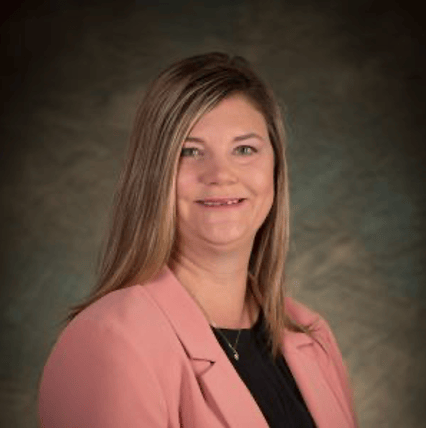
Kari Harris, Network Capacity Coach
|
|
|
|
|
Kari Harris is a network capacity coach located in the northern region of Illinois. She has educational experience as a classroom teacher, reading specialist, literacy coach and instructional coach. Kari has served at both the building and district levels in a variety of ways, including developing School and District Improvement Plans.
Kari is also an adjunct faculty member of the College of Education at Concordia University, Chicago, who has taught a wide variety of courses, including Beginning Reading, Diagnostic Assessment and Evaluation, and Elementary and Secondary Practicums. Kari earned a Bachelor of Science from Western Michigan University, Kalamazoo, a Master of Education from DePaul University, Chicago, and a Master of Arts – IL Principal Preparation from Concordia University, Chicago.
|
|
|
|
|
We sat down with Kari to learn more about her work as a network capacity coach. Here's an excerpt of our interview. |
|
What’s your advice for schools or districts on a journey of school improvement?
Take it one step at a time, trust the process, allow yourself to feel uncomfortable, assume positive intentions and – if you think it – say it!
Why do you enjoy systems coaching?
I enjoy systems coaching because I’m a big picture thinker who is also very detail oriented. Systems coaching shifts the process of coaching from individual capacity growth to growth for all within the school district. I enjoy helping school districts formalize their informal processes and systems, guiding them through evidence-based assessments, analyzing data, and creating action plans to continuously improve and sustain effective practices. Helping districts and leaders grow their MTSS system coaching skills allows for sustainability and growth for all learners, and that is the most rewarding part of my job.
|
| Read the full interview with Kari. |
|
|
|
|
Coaching Highlight
Worth School District 127
|
|
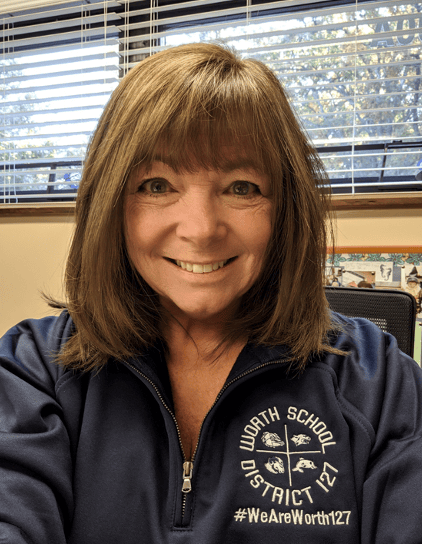
Meet Linda Esposito
|
|
|
|
Linda Esposito is the currently the director of curriculum and instruction for Worth School District 127, in Worth, Illinois, where she’s starting her 37th year. Over the years, Linda has worked as a principal, an assistant principal, a junior high teacher and an elementary teacher.
The Director of Curriculum and Instruction position was created only three short years ago, and Linda has been very busy! Resources across all curricular areas needed to be updated. Learning opportunities, resources, and instructional practices needed to be consistent and equitable across the district. There was a need to audit and grow current programs while at the same time adding new programs such as MTSS. Teachers needed focus and on-going support to meet their professional needs. It was hard to know where to begin when there was so much work to be done.
Linda reached out to IL MTSS to see if they could help develop an MTSS program from scratch. She says, “What I found was a resource and a partnership that would prove to be invaluable in helping move the district forward.”
|
|
|
|
|
We spoke with Linda to learn more about her district’s MTSS journey. Here’s an excerpt of that conversation. |
|
Have you seen any changes so far in your teachers’ motivation or feelings of success, or student achievement?
Teachers have always been motivated and extremely dedicated to the success of their students. The frustration set in with not having the knowledge or resources to identify the specific needs of individual students and remediate the deficits. The instructional interventionists started meeting with teachers to interpret assessment results, group students for Tier 2 and Tier 3 interventions, and deliver remediation using research-based interventions delivered with fidelity. The more the teachers learned, the more their hunger for knowledge grew, and the more they wanted to try new things in their classrooms. Student achievement skyrocketed as students moved fluidly in and out of different Tiers.
Is there anything else you’d like us to know?
In working with Kari and IL MTSS, we got so much more than just an MTSS coach. Our district and our staff got everything we asked for and more. Kari listened and learned about the unique needs of our district, and incorporated learning opportunities to meet those needs. We built a solid foundation for MTSS and continue to tweak and grow the program. Our teachers are receiving meaningful, on-going professional development and support tailored to meet our specific needs. We are looking at curricular resources, implementing programs with fidelity, and using assessment data to drive instruction. To say that she has helped us move the district forward with our goals is surely the understatement of the year, and we are extremely grateful for the partnership we share with IL MTSS.
|
| Read the full conversation with Linda. |
|
|
MTSS Evidence-Based Practices |
|
MTSS is evidence-based. In this section of the newsletter, we’ll dive into a different evidence-based practice in each issue.
In this issue: Data Review and Analysis
Data matters. In our April newsletter, IL-MTSS Network director Lori Hensold reminded us that MTSS helps schools work smarter, not harder. One of the ways we work smarter is by using data to ensure that interventions are targeted, consistent and effective.
But with so much data available, what data should your district collect? And how can you use that data for effective decision making? |
|
Here are some of our tips and resources for making the most of the data you have available.
|
-
Commit to using data. Start with the big picture: decide on your school vision, choose the data that will help you determine if you’re achieving that vision and track that data consistently. Check out this resource from Routledge for a big-picture view of which data to collect – and how you can use that data to implement a shared vision.
-
Apply data-based problem solving. No matter how good your data is, it’s only useful if you apply it to find solutions at every tier. Check out our guide to critical MTSS data systems to learn more about how to apply data-based problem solving to find the correct intervention or instructional plan.
-
Address the whole child. Often social-emotional or attendance issues are at the root of academic challenges. That’s why MTSS addresses the whole child – and your data needs to address the whole child, too. Take a look at this set of surveys from the National Center for Education Statistics. They can provide social-emotional data to complement your academic data and lead to better decision making.
|
|
|
2023-24 Learning Networks |
|
Choose from five networks for the 2023-24 school year.
Learning Network #1 MTSS Reset: Essential Practices for a Successful System
Our goal is to build the capacity of school teams and leaders to use and adapt an MTSS framework by identifying and strengthening essential practices, including using MTSS to address attendance issues and learning loss. 14 PD Hours.
Zoom sessions from 2 to 3:30 p.m. on the third Thursday of each month.
|
| Learn more and register. |
|
|
|
Learning Network #2: Developing an MTSS Guidebook to Support Fidelity and Sustainability
We’ll support leadership teams to develop or refine a written manual to support MTSS implementation. Includes a focus on English Language Learners. *Participants should have basic MTSS knowledge. 14 PD Hours.
Zoom sessions from 1 to 2:30 p.m. on the third Tuesday of most months.
|
| Learn more and register. |
|
|
|
Learning Network #3: Evidence-based Practices for Equitable Outcome
We’ll support educators in building knowledge of high leverage and evidence-based practices in the areas of collaboration, assessment, instruction and social emotional/behavioral domains, ensuring high quality, inclusive instruction for all learners. 9 PD Hours.
Zoom sessions from 1 to 2:15 p.m. on the first Thursday of each month.
|
| Learn more and register. |
|
|
|
Learning Network #4: Coaching to Support a Multi-tiered System of Supports
We’ll provide coaches and administrators with an opportunity to build knowledge, skills, and capacity of educators within an MTSS framework. 14 PD Hours.
Zoom sessions from 10 to 11:30 a.m. on the third Tuesday of each month.
|
| Learn more and register. |
|
|
|
Learning Network #5: High School MTSS
This network will support secondary educators with best practices in MTSS at the Universal, Targeted and Intensive levels of support in academic, behavior and social emotional areas. 14 PD Hours
Zoom sessions from 10 to 11:30 a.m. one Friday morning per month.
Registration for this session coming soon!
|
| Learn more. |
|
|
Forward to a Friend
Know someone who might enjoy receiving this newsletter? Use our Forward to a Friend link below. |
 |
|
|
|
|
|
|
Copyright © 2023 Illinois MTSS Network, All rights reserved.
Illinois MTSS Network
Northern Illinois University
307 Lowden Hall
DeKalb, IL 60115
United States
Click here to unsubscribe |
|
|
|
|